

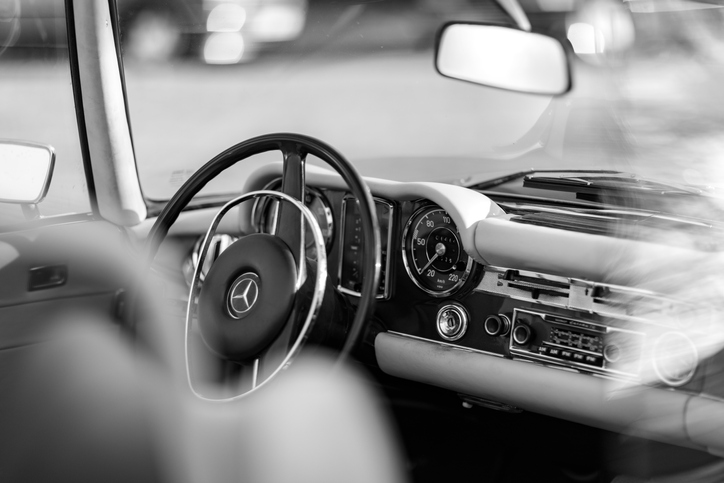
Though it may sound hard to believe, the first-ever cars didn’t even have steering wheels! They were developed quickly however, and as you might expect, Mercedes Benz played a huge role in the innovations that would follow over the next hundred years.
This article will go over Mercedes steering wheel history from the very beginning up to the present day, documenting the new developments that Mercedes contributed to it. We’ll talk about different types of Mercedes steering wheels through the ages and how they were different from one another.
The First Steering Wheel
When Carl Benz patented the first-ever automobile in 1886, there was no steering wheel, just a lever that the driver could pull from left to right. This was because the left-to-right movement mimicked the left-to-right pull that carriage drivers were used to when dealing with reins and horses.
Not much later, in 1894, a French engineer and racer installed a wheel in his car for the world’s first automobile race. His car was powered by an engine designed by Gottlieb Daimler, one of the founders of Mercedes-Benz.
In 1901 Daimler-Motoren-Gesellschaft, which would merge with Benz & Cie. in 1926 to form Daimler-Benz, unveiled the Mercedes 35 PS. This groundbreaking car featured not only a steering wheel but one on a tilted steering column, making it easier to use.
Major Innovations in the ‘50s
In the 1950s, most cars featured a wide, bucket-style front seat, and gear shifters could get in the way of a second (or even third) passenger sitting next to the driver. So in 1951, in the W187 Model 220 and W186 Model 300, Mercedes moved the gearshift onto the steering column to save space. This became the status quo across the auto industry for years.
The other major addition was power steering. Especially at lower speeds and in cities, steering could still be somewhat exhausting. Mercedes first fix for this was to expand the diameter of the steering wheel, but this started to impinge on the space left for other passengers. In 1958 in the 300 “Adenauer” Saloon, Mercedes introduced power steering into their vehicles for the first time to solve this problem.
Safety Developments
For a significant period, steering wheels could pose a major danger to drivers when they were in a crash. This is because the entire steering column would sometimes get pushed toward the driver. To solve this problem, Mercedes designed a telescopic steering column and impact absorber that would collapse in on itself. By 1967 this innovation became standard across the industry.
In 1981 Mercedes put an airbag in the steering wheel for the first time in the 126-Series S-Class. Over time they continued to develop the vacuum packing technology so the airbag could be packed into tighter and smaller spaces.
Adsitco and Steering Parts
Because there has been so much innovation over the years, different Mercedes steering wheels and steering columns require different parts. The best place to source parts for your steering system, or any other part of your Mercedes-Benz, is Adsitco.
We have an enormous online parts catalog with parts for Mercedes, old and new. Contact us today to talk about how we can help you with your Mercedes repairs.
-
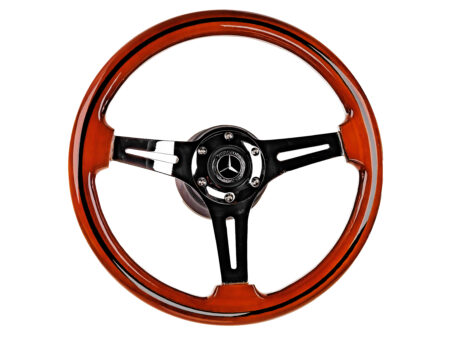 NARDI WOOD STEERING WHEEL$899.00 $899.00
 -
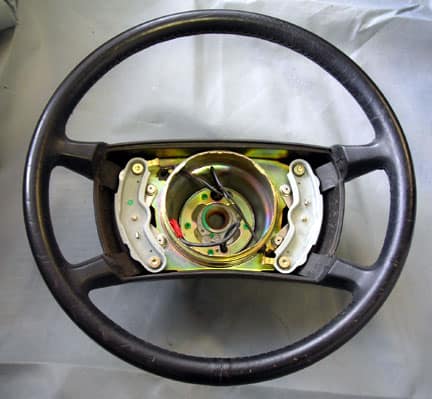 STEERING WHEELS – GOOD USED$450.00 $450.00
 -
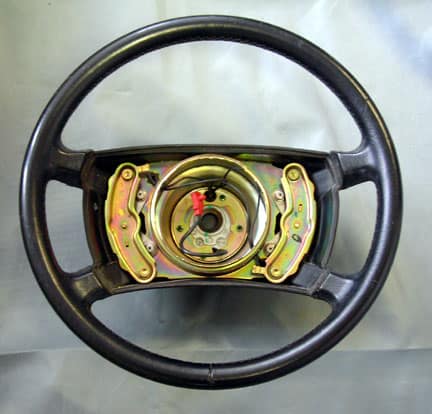 STEERING WHEELS – GOOD USED$450.00 $450.00
 -
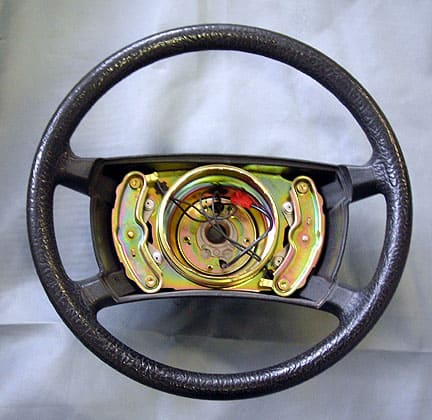 STEERING WHEELS – GOOD USED$350.00 $350.00
 -
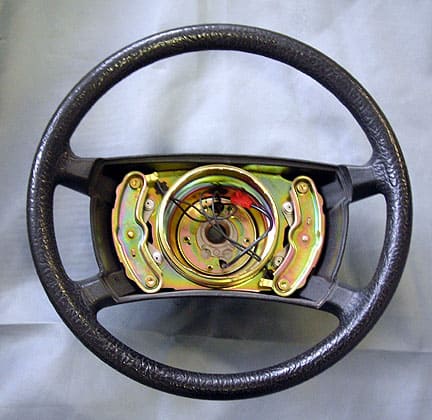 STEERING WHEELS – GOOD USED$350.00 $350.00
 -
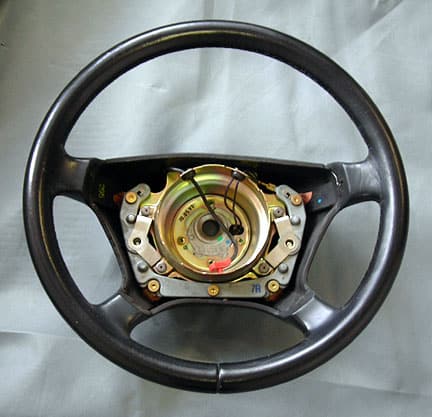 STEERING WHEELS – GOOD USED$450.00 $450.00
 -
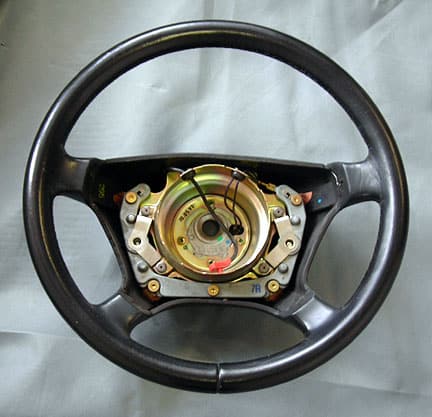 STEERING WHEELS – GOOD USED$350.00 $350.00
 -
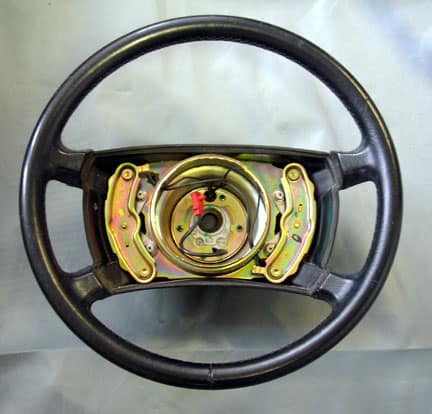 STEERING WHEELS – GOOD USED$450.00 $450.00
 -
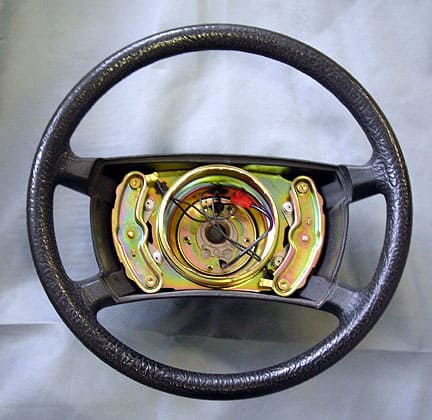 STEERING WHEELS – GOOD USED$350.00 $350.00